background image of this landing page
website logo - back to homepage

How EIS-driven BMS can shape future battery systems

On 30 September 2026, the NEMO project hosted its online webinar “EIS-driven BMS for Future Battery Systems“, focusing on the hardware and data side of the project’s results. Moderated by Md Sazzad Hosen (VUB, project coordinator), the session brought together experts from Infineon Technologies Austria, IAV and TTTech to discuss how advanced sensing and battery intelligence can support automotive and stationary applications.

Guenter Hofer (Infineon) explained how Electrochemical Impedance Spectroscopy (EIS) goes beyond conventional voltage, current and temperature measurements, offering a frequency-dependent “fingerprint” of the cell’s internal state. He presented the single-cell impedance measurement prototype used in NEMO, which delivers accurate magnitude and phase results per cell. He also noted the challenges of real-world implementation, such as cost, wiring and synchronisation in large battery packs, and recommended focusing on the most sensitive frequencies for specific use cases rather than measuring the full spectrum.

Thomas Percz (IAV) described how NEMO translates sensing and modelling capabilities into a production-oriented BMS architecture. A conventional BMS remains at the core to guarantee safe operation and provide a reference for benchmarking, while additional computing resources, a framework for integrating partner algorithms and a high-speed cloud interface enable the new EIS-based functions to run without interfering with core safety functions.

Bernhard Lutzer (TTTech) outlined how intelligence should be distributed across the onboard BMS, the edge gateway and the cloud. Safety- and time-critical functions must always remain on board, while fleet comparisons, historical analysis and model recalibration can run asynchronously in the cloud. He also stressed that cloud outputs must be validated before being trusted, and that the system must continue to operate safely when the connection is unavailable.

Presentations were followed by a panel discussion and Q&A. The panel agreed that EIS is likely to play a growing role in future BMS, with cost remaining the main driver for market uptake. Discussions also covered cybersecurity and data trust in cloud-connected systems, the limits of moving EIS from cell to module level, and the opportunities and challenges of wireless BMS in electromagnetically noisy battery environments.

What’s next?

As NEMO approaches its conclusion, the project will present its final results at its closing event in Milan. Register now and join us in Milan!

background image of this landing page
website logo - back to homepage

Europe makes the science. China makes the batteries. But who builds the future?

Article by Martino De Mori

Look at the cars in a traffic jam in Europe today. Around two out of every ten new vehicles rolling off the forecourt are battery electric. In some months of 2026, that share already touched 22%. The shift is real, and it is accelerating. What is less visible — and far more consequential — is what powers those vehicles, and where it comes from.

Pull into a charging station and look more carefully at the queue. In November 2025, Chinese manufacturers captured a record 12.8% of Europe’s electric vehicle sales — meaning that, among the cars plugging in, roughly one in eight already carries a Chinese badge. BYD, SAIC, Chery: brands that barely registered on European roads three years ago are now a visible, and growing, presence at every charging point.

The Chinese badge, however, is only the most visible part of the story. Look under the bonnet of a Volkswagen, a BMW or a Stellantis electric vehicle, and the picture is similar. BMW relies on three Chinese manufacturers — SVOLT, CATL and EVE Energy — for battery supply, with Chinese cell content estimated to reach above 60% of its global battery volume by 2027. Stellantis and Volkswagen have gone further, forming joint ventures and ownership stakes with Chinese battery giants. LFP cells used in European EV production are currently being imported from China. The European badge on the car does not mean the battery inside was made in Europe. In most cases, it was not. In 2025, China accounted for over 80% of global battery cell production, and nearly 60% of all electric vehicles imported into the EU came from Chinese factories. BYD alone more than doubled its EU registrations in the first four months of 2026, growing by over 150% year on year.
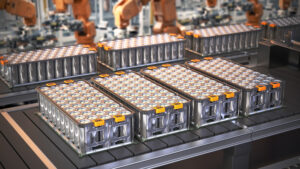
Photo by adventtr on iStock

“The challenge is not a technology gap,” says Patrick Plötz, Head of the Department of Energy Technology and Energy Systems at Fraunhofer ISI. “The key gap is ultimately a systems and governance gap: fragmented investment, uncertain policy frameworks and insufficient coordination across the value chain.” Europe has strong battery research and innovative companies, he argues. What it has lacked is what China combined early and at scale: industrial policy, market creation and manufacturing capacity, working in concert. “It takes time to catch up,” he adds. “And that time is not unlimited.”

It is against this backdrop that the EUSEW session “Competitive by Design”, held in Brussels on 10 June 2026, brought together industry leaders, EU institutions, and Horizon-funded projects for a candid exchange. The discussion was anchored by a pointed observation from Bozorg Khanbaei, Executive Director of Batteries European Partnership Association (BEPA): “You cannot make cheap batteries if you do not know how to make batteries; but if you do know how to make them, then you can make cheap ones too.” The argument for building European gigafactories, he stressed, is ultimately an argument for acquiring and retaining industrial knowledge — knowledge that cannot be built in isolation. “It requires an ecosystem where manufacturing, research, recycling and policy reinforce one another. Investing in one pillar without the others leaves the whole structure exposed.”

That ecosystem logic plays out in projects like NEMO, an EU-funded initiative developing next-generation battery management systems. As Jasmin Jabbarpour, Battery Innovation Projects Lead at Icons Innovation Strategies and Project Management Officer for NEMO, explains: “This is an ambitious project which seeks to advance battery management systems — one of the core components of battery technology. It aims to be at the forefront of this innovation, extending battery life, making batteries safer and enabling second-life use.” But the gap between a promising research output and an industrially deployable product, she notes, is where European innovation most often stalls. “Sometimes battery innovation projects are struggling to pass from research to industrial deployment. Having strong pilots shows whether there is industrial potential — but that is not enough on its own. The market also needs to be ready to receive and scale these innovations.”

The technical dimensions of that gap are precise and demanding. Norbert Sailer, researcher at Infineon Technologies and NEMO partner, describes what deploying electrochemical impedance spectroscopy (EIS) — the diagnostic technology at the core of this European initiative — actually requires outside a controlled lab environment. “In a real battery pack, algorithms must be robust enough to distinguish between multiple simultaneously occurring effects — ageing, temperature, state-of-charge variations — rather than the controlled single-variable experiments typical in research,” he explains. Traction inverters generate noise that overlaps with EIS measurement frequencies; scaling from a single cell to an 800-volt automotive pack requires substantial engineering investment. And even where the technology is ready, adoption depends on economics. “EIS-based diagnostics add system cost,” Sailer notes. “Carmakers require clear value propositions: extended warranty confidence, second-life battery certification, reduced costs. Without a compelling business case, adoption lags despite technical readiness.” NEMO has demonstrated proof-of-concept at module level. “In the near term,” Sailer adds, “stationary energy storage offers the most promising pathway — the cost structure is more favourable than automotive.”
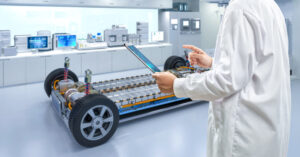
Photo by PhonlamaiPhoto on iStock

Underlying all of this is a geopolitical question that the Brussels session addressed directly. As Europe accelerates its energy transition, does it risk replacing dependence on fossil fuels with a new dependence on foreign battery technologies and critical raw materials? Plötz argues the concern is real but structurally different from what came before. “Batteries require large upfront material inputs, but these materials can be recycled and reused, unlike oil or gas that must continuously be imported and burned.” The deeper vulnerability, he says, is not raw material access per se. “The larger risk is dependence on processing capacity, refining and manufacturing know-how concentrated in Asia.” The solution is not autarky but strategic resilience. “The biggest structural change would be creating long-term policy credibility for industrial scaling. Stable market signals, faster permitting and long-term investment certainty would probably do more to close the lab-to-market gap than isolated subsidy programmes alone.”

Back to the charging queue. According to the IEA’s Global EV Outlook 2026, one in three cars sold in Europe will already be electric this year. By 2030, Transport & Environment projects EVs could reach 30% of new car sales, with battery prices dropping over 30% — making electric cars price-competitive across all segments for the first time. The question is who generates that cost reduction: Chinese manufacturers, whose scale already gives them a structural lead, or Europe, building project by project the industrial knowledge to compete. The answer depends on decisions being taken now, in labs like NEMO’s, in policy chambers and on factory floors that Europe is still, in many places, yet to build.

Picture by Marek Piwnicki on Pexels

background image of this landing page
website logo - back to homepage

Uncovering the hidden drivers of battery impedance changes

Understanding what happens inside a battery during operation is essential for improving performance, safety and lifetime. A new study, conducted within the NEMO framework, introduces two innovative measurement protocols that make it possible to distinguish between two key factors affecting battery impedance during high-current excitation: electrochemical processes and self-heating.

Using advanced Electrochemical Impedance Spectroscopy (EIS) and Nonlinear EIS (NLEIS) techniques, the researchers developed methods that exploit the different time scales of these phenomena. While electrochemical nonlinearities occur almost instantaneously, temperature-related effects develop more slowly. By separating these contributions, the new approach provides a more accurate picture of battery behaviour under demanding operating conditions.

The methods were tested on a lithium nickel manganese cobalt oxide (NMC) battery cell and successfully quantified the relative impact of thermal and electrochemical effects on impedance changes. The results revealed that, under certain conditions, impedance reductions are driven entirely by electrochemical processes, while at higher excitation levels both electrochemical and thermal contributions play a role.

The study also challenges a widely used assumption in battery diagnostics. Researchers found that the battery remained within a linear operating regime at voltage amplitudes up to 280 mV, significantly higher than the commonly accepted 20 mV threshold. This finding could help simplify future impedance measurements and expand the practical use of impedance-based diagnostic techniques.

Read the full study on Zenodo: Quantitative separation of thermal and electrochemical contributions in nonlinear EIS measurements

Picture by Steve A Johnson on Unsplash

background image of this landing page
website logo - back to homepage

NEMO at NetZero Milan 2026

NEMO is pleased to announce its participation in NetZero Milan 2026, one of Europe’s leading events dedicated to accelerating the transition towards a climate-neutral future. Taking place from 20 to 22 October 2026 at Allianz MiCo in Milan, Italy, the event brings together industry leaders, research organisations, policymakers, innovators, investors and technology providers from across the energy and industrial sectors, creating opportunities for collaboration, knowledge exchange and the presentation of cutting-edge solutions that support Europe’s clean energy transition.

At the heart of NEMO’s participation is its mission to redefine the state of the art in battery management systems (BMS) through the development and application of advanced modelling techniques based on Electrochemical Impedance Spectroscopy (EIS). Combining innovative physics-based and data-driven models with state estimation techniques, the project is developing novel software and hardware solutions that improve battery performance, safety and longevity for both stationary and automotive applications.

NEMO will be represented at the ICONS Stand within the Solutions Hub area, alongside 12 other Horizon Europe projects — among these GIGABAT, REBELION and THOR. Visitors to the stand will have the opportunity to meet project partners, learn more about NEMO’s objectives and achievements, and discover how advanced battery monitoring and modelling approaches can contribute to safer, longer-lasting and more efficient battery systems.

Alongside its participation at NetZero Milan, NEMO will hold its Final Event on 20 October 2026, from 14:00 to 18:00. Titled “NEMO, finding its goals: safer, longer-lasting batteries“, the event will bring together the entire consortium to showcase the results achieved throughout the project’s journey. Read more and register here.

For NEMO, NetZero represents a valuable opportunity to engage with stakeholders across the battery, energy and mobility value chains, exchange insights with the wider innovation community and contribute to discussions on the future of battery technologies in Europe.

Join us in Milan and discover how NEMO is helping build safer, smarter and longer-lasting batteries for the clean energy transition!

background image of this landing page
website logo - back to homepage

Inside the latest advances in Battery Management Systems

On 18 June 2026, NEMO joined partners from the BMS Alliance for the fourth webinar in the series, “Deploying Physics-Based Battery Models in Embedded BMS: European Readiness, Current Approaches, and Challenges“. Hosted by NEXTBMS, the online event brought together experts from across Europe to discuss the latest developments in Battery Management Systems (BMS) and advanced battery monitoring technologies.

The webinar featured contributions from the four BMS Alliance projects — NEMO, ENERGETIC, BATMAX, and NEXTBMS — highlighting innovative approaches to battery modelling, embedded systems, battery state estimation, and cloud-supported battery management.

Representing NEMO, Martin Perez Chuecos (CSEM) shared a presentation on how Electrochemical Impedance Spectroscopy (EIS) can be integrated into embedded battery management systems to provide more accurate and reliable battery monitoring at cell level.

Through the project’s zBMS and zBMS+ concepts, CSEM’s presentation demonstrated how EIS data can be used to estimate key battery parameters, including:

  • State of Charge (SoC) – enabling more accurate charge estimation;
  • State of Health (SoH) – monitoring battery ageing and performance degradation over time;
  • State of Temperature (SoT) – estimating internal cell temperature without additional sensors;
  • State of Power (SoP) – helping determine safe operating limits throughout the battery lifecycle.

The presentation showcased how advanced battery intelligence can support safer, more efficient, and longer-lasting battery systems, contributing to the development of next-generation battery management solutions in Europe.

The webinar concluded with a panel discussion on current BMS developments, future challenges, and the importance of collaboration in strengthening Europe’s battery innovation ecosystem.

Read more, explore the other presentation and watch the full webinar recording here.

background image of this landing page
website logo - back to homepage

NEMO Joins European Innovation Projects for International Women in Engineering Day 2026

NEMO is proud to be among the European projects taking part in a joint social media campaign coordinated by ICONS Innovation Strategies for International Women in Engineering Day (INWED) 2026 – happening today 23 June 2026.

Bringing together EU-funded initiatives across sectors, from mobility and energy to manufacturing and the built environment, the campaign celebrates the contribution of women engineers and researchers while promoting diversity, innovation and equal opportunities.

Participating projects will share video messages and quotes answering a key question: “How would you encourage other women to take up a career in engineering?” The initiative aims to inspire the next generation and highlight the importance of inclusive representation in STEM fields.

As part of NEMO’s contribution, Dr. Martina Weise (IAV) shares her perspective:

“Join the world of engineering: Discover your joy for math, software and technology to create innovative solutions for everyday problems as well as future challenges. Find optimal answers through team collaboration.”

Through real stories and experiences, the campaign showcases how women are already shaping Europe’s technological future.

Read more about the initiative here.

background image of this landing page
website logo - back to homepage

Diagnostic approach reveals how temperature shapes battery aging in electric vehicles

As electric vehicles expand globally, understanding how batteries age under real-world conditions is essential for improving performance, safety, and durability. Within the NEMO project framework, researchers at Vrije Universiteit Brussel (VUB) investigated the degradation of 75 Ah NMC631 lithium-ion cells, focusing on the impact of temperature using a combined diagnostic approach based on incremental capacity analysis (ICA) and electrochemical impedance spectroscopy (EIS).

Cells were tested under identical cycling conditions while varying only the temperature, allowing a clear assessment of temperature-driven aging. The results show that lower temperatures significantly slow degradation, with cells maintaining stable electrochemical behavior and retaining over 90% state of health even after 1600 cycles. In contrast, higher temperatures accelerate aging and intensify internal changes.

The study reveals that multiple degradation mechanisms occur simultaneously, including lithium inventory loss, reduced conductivity, and active material degradation. It also shows that internal differences within cells grow over time, leading to distinct aging pathways—even under identical operating conditions.

By combining ICA and EIS, the researchers provide a more complete understanding of battery health, enabling clearer differentiation between gradual degradation and potential failure modes. This approach offers valuable insights for improving battery management systems, enhancing safety, and extending the lifetime of EV batteries.

Read the full study here.

Picture by Vardan Papikyan on Unsplash

background image of this landing page
website logo - back to homepage

NEMO Newsletter – Spring Updates 2026!

The fourth edition of the NEMO newsletter is now available—bringing you the latest project updates, key events, and new resources!

What’s inside?

NEMO at EUSEW 2026

  • On June 10th NEMO will take part in the BMS Alliance & BEPA policy session at the European Sustainable Energy Week, contributing to discussions on strengthening Europe’s battery value chain and competitiveness.

Upcoming Events – June 2026

  • June 16: NEMO joins the ENERGETIC Final Event in Brussels and online, showcasing advances in smart BMS, AI, and digital twins.
  • June 18: NEMO participates in a BMS Alliance webinar on deploying physics-based battery models in embedded systems.

New Factsheet Available

  • Discover NEMO’s latest factsheet on software innovations, covering real-time BMS execution, cloud integration, and advanced battery analytics.

Recent Publications

Explore new research and project highlights, including battery swelling prediction, impedance diagnostics, and NEMO’s feature in ICONS Battery Innovation Report.

Stay informed and follow us on LinkedIn and BlueSky for real-time updates.

Read the newsletter now, and subscribe!

background image of this landing page
website logo - back to homepage

NEMO featured in ICONS report on Europe’s battery innovation landscape

Featured image by Neelakshi Singh – Unsplash

Last week, ICONS Innovation Strategies, partner responsible for communication and dissemination in the NEMO project, released the Battery Innovation Report “Catalysing Battery Innovation: Driving Impact Across Europe’s Battery R&D Ecosystem“. The report provides an indepth analysis of the entire battery value chain, covering raw materials and midstream processing, cell manufacturing, recycling, and second life applications. It examines the structural pressures currently impacting the sector, including global overcapacity, rising price competition, and China’s dominant role in production and refining. In parallel, it highlights the technological trends reshaping the landscape, from advanced chemistries and smart materials to digitalised manufacturing and more efficient end-of-life solutions. 

Particular attention is given to emerging technology trends, including the growing role of advanced Battery Management Systems (BMS), which are evolving into intelligent layers capable of enabling predictive health monitoring, optimising battery performance, supporting second-life applications, and enhancing overall lifecycle management. In this context, the role of NEMO’s research is particularly relevant, as it directly addresses these challenges through the development of next-generation models and software for advanced battery electronics. By combining physics-based and data-driven approaches, NEMO enables more accurate state estimation, improved diagnostics, and the integration of cloud-supported intelligence. This allows battery systems to better interpret internal conditions and adapt their operation over time, supporting more reliable and efficient deployment in both automotive and stationary applications. 

NEMO is also featured among the EU funded initiatives contributing to this transformation, demonstrating how coordinated R&I efforts are helping build a more resilient and sustainable European battery ecosystem. By profiling these initiatives, the report underscores the importance of collaborative innovation in advancing Europe’s technological and industrial capacity. 

Read and downoad the full report here: https://www.icons.it/battery-innovation/