
background image of this landing page
website logo - back to homepage

How EIS-driven BMS can shape future battery systems

On 30 September 2026, the NEMO project hosted its online webinar “EIS-driven BMS for Future Battery Systems“, focusing on the hardware and data side of the project’s results. Moderated by Md Sazzad Hosen (VUB, project coordinator), the session brought together experts from Infineon Technologies Austria, IAV and TTTech to discuss how advanced sensing and battery intelligence can support automotive and stationary applications.

Guenter Hofer (Infineon) explained how Electrochemical Impedance Spectroscopy (EIS) goes beyond conventional voltage, current and temperature measurements, offering a frequency-dependent “fingerprint” of the cell’s internal state. He presented the single-cell impedance measurement prototype used in NEMO, which delivers accurate magnitude and phase results per cell. He also noted the challenges of real-world implementation, such as cost, wiring and synchronisation in large battery packs, and recommended focusing on the most sensitive frequencies for specific use cases rather than measuring the full spectrum.

Thomas Percz (IAV) described how NEMO translates sensing and modelling capabilities into a production-oriented BMS architecture. A conventional BMS remains at the core to guarantee safe operation and provide a reference for benchmarking, while additional computing resources, a framework for integrating partner algorithms and a high-speed cloud interface enable the new EIS-based functions to run without interfering with core safety functions.

Bernhard Lutzer (TTTech) outlined how intelligence should be distributed across the onboard BMS, the edge gateway and the cloud. Safety- and time-critical functions must always remain on board, while fleet comparisons, historical analysis and model recalibration can run asynchronously in the cloud. He also stressed that cloud outputs must be validated before being trusted, and that the system must continue to operate safely when the connection is unavailable.

Presentations were followed by a panel discussion and Q&A. The panel agreed that EIS is likely to play a growing role in future BMS, with cost remaining the main driver for market uptake. Discussions also covered cybersecurity and data trust in cloud-connected systems, the limits of moving EIS from cell to module level, and the opportunities and challenges of wireless BMS in electromagnetically noisy battery environments.

What’s next?

As NEMO approaches its conclusion, the project will present its final results at its closing event in Milan. Register now and join us in Milan!
background image of this landing page
website logo - back to homepage

NEMO at NetZero Milan 2026

NEMO is pleased to announce its participation in NetZero Milan 2026, one of Europe’s leading events dedicated to accelerating the transition towards a climate-neutral future. Taking place from 20 to 22 October 2026 at Allianz MiCo in Milan, Italy, the event brings together industry leaders, research organisations, policymakers, innovators, investors and technology providers from across the energy and industrial sectors, creating opportunities for collaboration, knowledge exchange and the presentation of cutting-edge solutions that support Europe’s clean energy transition.

At the heart of NEMO’s participation is its mission to redefine the state of the art in battery management systems (BMS) through the development and application of advanced modelling techniques based on Electrochemical Impedance Spectroscopy (EIS). Combining innovative physics-based and data-driven models with state estimation techniques, the project is developing novel software and hardware solutions that improve battery performance, safety and longevity for both stationary and automotive applications.

NEMO will be represented at the ICONS Stand within the Solutions Hub area, alongside 12 other Horizon Europe projects — among these GIGABAT, REBELION and THOR. Visitors to the stand will have the opportunity to meet project partners, learn more about NEMO’s objectives and achievements, and discover how advanced battery monitoring and modelling approaches can contribute to safer, longer-lasting and more efficient battery systems.

Alongside its participation at NetZero Milan, NEMO will hold its Final Event on 20 October 2026, from 14:00 to 18:00. Titled “NEMO, finding its goals: safer, longer-lasting batteries“, the event will bring together the entire consortium to showcase the results achieved throughout the project’s journey. Read more and register here.

For NEMO, NetZero represents a valuable opportunity to engage with stakeholders across the battery, energy and mobility value chains, exchange insights with the wider innovation community and contribute to discussions on the future of battery technologies in Europe.

Join us in Milan and discover how NEMO is helping build safer, smarter and longer-lasting batteries for the clean energy transition!

background image of this landing page
website logo - back to homepage

Inside the latest advances in Battery Management Systems

On 18 June 2026, NEMO joined partners from the BMS Alliance for the fourth webinar in the series, “Deploying Physics-Based Battery Models in Embedded BMS: European Readiness, Current Approaches, and Challenges“. Hosted by NEXTBMS, the online event brought together experts from across Europe to discuss the latest developments in Battery Management Systems (BMS) and advanced battery monitoring technologies.

The webinar featured contributions from the four BMS Alliance projects — NEMO, ENERGETIC, BATMAX, and NEXTBMS — highlighting innovative approaches to battery modelling, embedded systems, battery state estimation, and cloud-supported battery management.

Representing NEMO, Martin Perez Chuecos (CSEM) shared a presentation on how Electrochemical Impedance Spectroscopy (EIS) can be integrated into embedded battery management systems to provide more accurate and reliable battery monitoring at cell level.

Through the project’s zBMS and zBMS+ concepts, CSEM’s presentation demonstrated how EIS data can be used to estimate key battery parameters, including:

  • State of Charge (SoC) – enabling more accurate charge estimation;
  • State of Health (SoH) – monitoring battery ageing and performance degradation over time;
  • State of Temperature (SoT) – estimating internal cell temperature without additional sensors;
  • State of Power (SoP) – helping determine safe operating limits throughout the battery lifecycle.

The presentation showcased how advanced battery intelligence can support safer, more efficient, and longer-lasting battery systems, contributing to the development of next-generation battery management solutions in Europe.

The webinar concluded with a panel discussion on current BMS developments, future challenges, and the importance of collaboration in strengthening Europe’s battery innovation ecosystem.

Read more, explore the other presentation and watch the full webinar recording here.

background image of this landing page
website logo - back to homepage

NEMO Joins European Innovation Projects for International Women in Engineering Day 2026

NEMO is proud to be among the European projects taking part in a joint social media campaign coordinated by ICONS Innovation Strategies for International Women in Engineering Day (INWED) 2026 – happening today 23 June 2026.

Bringing together EU-funded initiatives across sectors, from mobility and energy to manufacturing and the built environment, the campaign celebrates the contribution of women engineers and researchers while promoting diversity, innovation and equal opportunities.

Participating projects will share video messages and quotes answering a key question: “How would you encourage other women to take up a career in engineering?” The initiative aims to inspire the next generation and highlight the importance of inclusive representation in STEM fields.

As part of NEMO’s contribution, Dr. Martina Weise (IAV) shares her perspective:

“Join the world of engineering: Discover your joy for math, software and technology to create innovative solutions for everyday problems as well as future challenges. Find optimal answers through team collaboration.”

Through real stories and experiences, the campaign showcases how women are already shaping Europe’s technological future.

Read more about the initiative here.

background image of this landing page
website logo - back to homepage

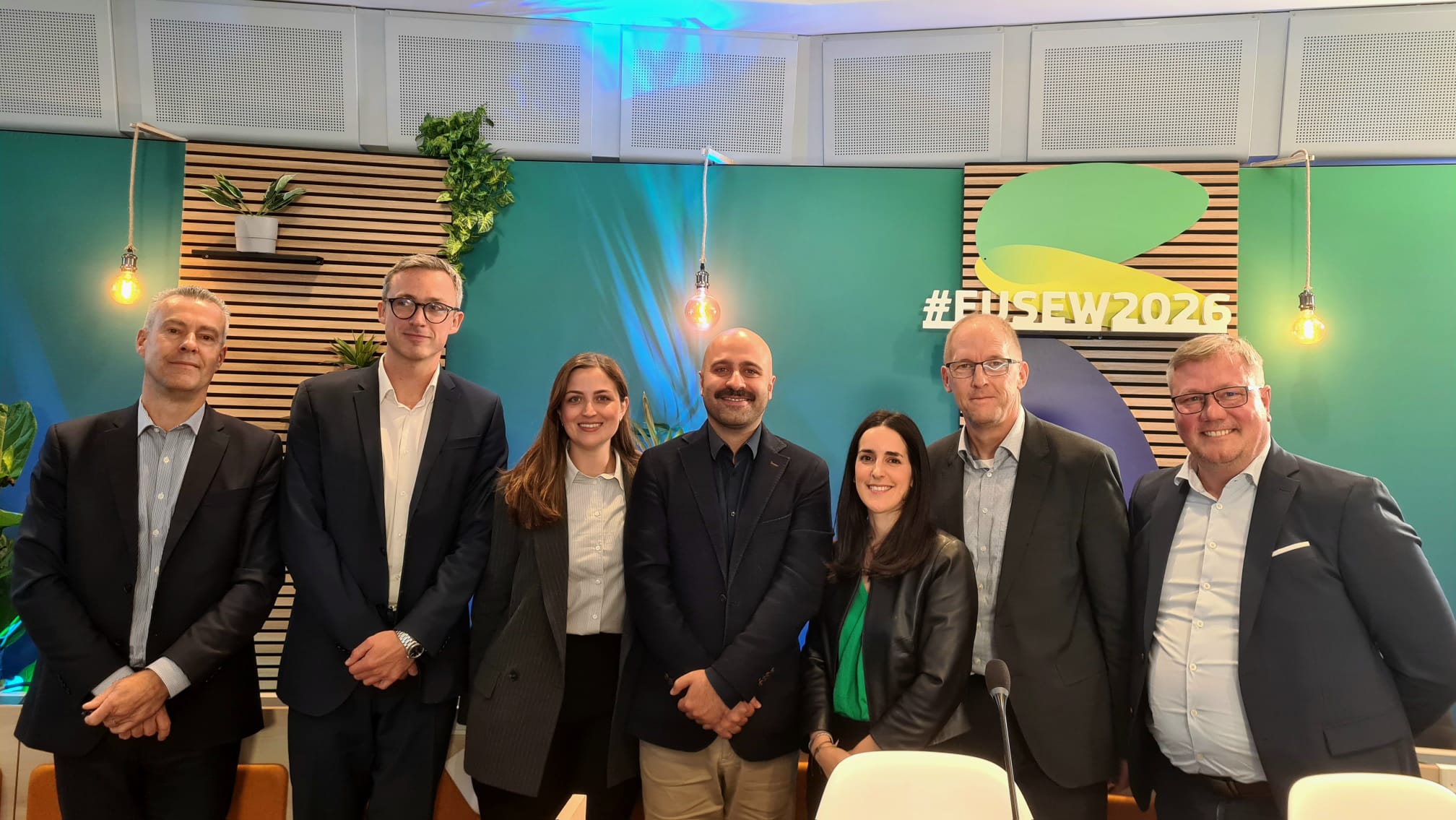
Building Europe’s Battery Ecosystem: Key Takeaways from EUSEW 2026

On 10 June 2026, the BMS Alliance cluster co-hosted a session at the European Sustainable Energy Week in Brussels, together with BEPA. Titled “Competitive by Design: Strengthening Europe’s Battery Value Chain Resilience”, the session brought together EU institutions, industry leaders, and Horizon-funded projects for a candid exchange on what it will actually take to secure Europe’s position in batteries.

Here is what we took away.

Competitiveness is not just about capacity, it is about mastery

One of the clearest threads running through the session was that announcing gigafactories is not the same as building industrial capability. Matthieu Hubert (ACC) was direct: ACC is producing real batteries for real customers at its gigafactory near Brussel. The performance is not the problem, the challenge is cost competitiveness. If we are not competitive on the cost of energy and raw materials,he noted, the battery will be expensive regardless

Franz Geyer (BMW Group) echoed the same logic from the OEM perspective: the products are competitive, but the cost gap with Asian producers remains a structural challenge, compounded by regulatory complexity, climate pressures, and the pace of technological change.

Bozorg Khanbaei (BEPA) added an important dimension: manufacturing excellence is not just a cost question. “You cannot make cheap batteries if you do not know how to make batteries; but if you do know how to make them, then you can make cheap ones too.” The argument for gigafactories is ultimately an argument for acquiring and retaining industrial knowledge in Europe. And that knowledge, Mr Khanbaei was clear, cannot be built in isolation: it requires an ecosystem where manufacturing, research, recycling, and policy reinforce one another. Investing in one pillar without the others leaves the whole structure exposed.

Batteries do not exist in isolation and neither does the ecosystem

If there was one idea that cut across every contribution at the session, it was this: Europe will not build a competitive battery sector by optimising individual links in the chain. It needs the whole chain to work together.

Bozorg Khanbaei (BEPA) made the point explicitly: the priority should be continued investment in innovation that integrates all parts of the value chain, but stays agile enough to respond to a rapidly shifting demand landscape. That means not locking in on a single chemistry or application too early, maintaining a portfolio of technologies, and ensuring that research, manufacturing, and recycling capabilities develop in parallel rather than in sequence.

Maitane Berecibar (VUB) reinforced this from a research infrastructure perspective. A functioning battery ecosystem requires the physical and institutional scaffolding without which knowledge cannot be generated, tested, or retained in Europe. The challenge is not the absence of effort but the need to ensure that effort is connected.

Karsten Mueller (IAV) brought the ecosystem argument down to the level of technology development. IAV’s work on cloud-based BMS, system-on-chip BMS, and AI battery functions all depends on data and partnerships across sectors and disciplines. No single organisation can generate the volumes of data or the range of expertise required. Collaboration is not a nice-to-have, it is an engineering necessity.

Demand is evolving and diversifying

While electric vehicles remain the primary demand driver, Mr Khanbaei  highlighted a notable shift: stationary storage demand has grown significantly over the past year, driven by falling battery costs and more favourable policies. Looking further ahead, defence, robotics, aviation, and data centres are emerging as significant new demand sources, each with distinct technical requirements. This points to the need for a portfolio of battery chemistries and technologies rather than a single dominant solution. Ms Berecibar reinforced this, calling for continued research across LFP, lithium-ion, and other chemistries to understand which is best suited to which application.

Policy needs to be structural and specific

Jacek Truszczyński (DG GROW) outlined the policy logic underpinning the Battery Booster strategy: without domestic production, it is difficult to secure access to raw materials; without raw material security, technology mastery is fragile. He described a gradual approach under the Accelerator Act – starting with procurement options that favour EU-made cells, then progressively extending requirements to cathode materials.

The session in context

For NEMO, whose work on advanced BMS sits at the intersection of modelling, safety, and system integration, the session was a timely reminder of the industrial stakes behind the research. The questions debated are precisely the questions that projects like NEMO exist to help answer.

NEMO’s final project event is planned for autumn 2026. Stay tuned for further details.

background image of this landing page
website logo - back to homepage

NEMO Newsletter – Spring Updates 2026!

The fourth edition of the NEMO newsletter is now available—bringing you the latest project updates, key events, and new resources!

What’s inside?

NEMO at EUSEW 2026

  • On June 10th NEMO will take part in the BMS Alliance & BEPA policy session at the European Sustainable Energy Week, contributing to discussions on strengthening Europe’s battery value chain and competitiveness.

Upcoming Events – June 2026

  • June 16: NEMO joins the ENERGETIC Final Event in Brussels and online, showcasing advances in smart BMS, AI, and digital twins.
  • June 18: NEMO participates in a BMS Alliance webinar on deploying physics-based battery models in embedded systems.

New Factsheet Available

  • Discover NEMO’s latest factsheet on software innovations, covering real-time BMS execution, cloud integration, and advanced battery analytics.

Recent Publications

Explore new research and project highlights, including battery swelling prediction, impedance diagnostics, and NEMO’s feature in ICONS Battery Innovation Report.

Stay informed and follow us on LinkedIn and BlueSky for real-time updates.

Read the newsletter now, and subscribe!

background image of this landing page
website logo - back to homepage

NEMO Consortium gathers in Neuchâtel as project enters Its final stretch

The NEMO consortium came together on 27–28 May 2026 for its General Assembly, hosted at the facilities of CSEM in Neuchâtel, Switzerland. The meeting marked a significant moment for the project: with NEMO set to conclude in October 2026, this was one of the last opportunities for partners to meet in person and take stock of a shared journey that has pushed the boundaries of battery management system research.

Discussions covered the scientific and technical progress achieved across the project’s core workstreams, including advances in battery modelling and experimental testing. Partners also reviewed the outcomes expected before the project closes, ensuring the consortium is on track to deliver on its commitments to the European research community and its funding bodies.

The final months of NEMO will be marked by several key events. The project will be represented at the EU Sustainable Energy Week (EUSEW) session on 10 June 2026, offering a platform to share results with a broader European audience. A final project event is planned for autumn 2026 — more details will be announced soon, so stay tuned.

New scientific publications are also on the horizon, as the team continues to reach milestones and formalise results. Readers can expect further papers in the coming months.

The General Assembly also included a tour of CSEM’s testing facilities, giving partners a first-hand look at the experimental work carried out on BMS and BMS+ systems. It was a valuable reminder of the concrete, real-world dimension behind the project’s modelling and simulation work.

background image of this landing page
website logo - back to homepage

NEMO featured in ICONS report on Europe’s battery innovation landscape

Featured image by Neelakshi Singh – Unsplash

Last week, ICONS Innovation Strategies, partner responsible for communication and dissemination in the NEMO project, released the Battery Innovation Report “Catalysing Battery Innovation: Driving Impact Across Europe’s Battery R&D Ecosystem“. The report provides an indepth analysis of the entire battery value chain, covering raw materials and midstream processing, cell manufacturing, recycling, and second life applications. It examines the structural pressures currently impacting the sector, including global overcapacity, rising price competition, and China’s dominant role in production and refining. In parallel, it highlights the technological trends reshaping the landscape, from advanced chemistries and smart materials to digitalised manufacturing and more efficient end-of-life solutions. 

Particular attention is given to emerging technology trends, including the growing role of advanced Battery Management Systems (BMS), which are evolving into intelligent layers capable of enabling predictive health monitoring, optimising battery performance, supporting second-life applications, and enhancing overall lifecycle management. In this context, the role of NEMO’s research is particularly relevant, as it directly addresses these challenges through the development of next-generation models and software for advanced battery electronics. By combining physics-based and data-driven approaches, NEMO enables more accurate state estimation, improved diagnostics, and the integration of cloud-supported intelligence. This allows battery systems to better interpret internal conditions and adapt their operation over time, supporting more reliable and efficient deployment in both automotive and stationary applications. 

NEMO is also featured among the EU funded initiatives contributing to this transformation, demonstrating how coordinated R&I efforts are helping build a more resilient and sustainable European battery ecosystem. By profiling these initiatives, the report underscores the importance of collaborative innovation in advancing Europe’s technological and industrial capacity. 

Read and downoad the full report here: https://www.icons.it/battery-innovation/

background image of this landing page
website logo - back to homepage

Pushing batteries above their limit: Abuse tests in NEMO

Author: Christoph Drießen, University Assistant and PhD Candidate, Vehicle Safety Institute, Graz University of Technology

A range of mechanical, thermal, and electrical abuse tests are conducted to simulate potential real-world hazards. The analysis of the battery responses under these conditions allows examining various failure mechanisms and collecting data for developing models and algorithms for protective safety measures. Insights gained from abuse testing contribute to the design of safer batteries and help reduce the risk of fire, explosion, or other safety-critical incidents in real-life applications.


Abuse test in NEMO

As part of the NEMO project, one of the key tasks of the Vehicle Safety Institute at TU Graz is to develop a data-driven State-of-Safety estimator that can predict safety-critical events in the short and long term.

At first, the focus has been placed on mechanical loads, which simulate the deformation that a battery cell might experience during a side impact in a collision or crash. These experiments, conducted under controlled conditions, apply significantly higher mechanical loads than those typically seen in real-world crash scenarios, with the aim of establishing a high safety margin of resistance.

We have conducted some mechanical abuse tests – more specifically, local mechanical deformation tests – to determine the mechanical load limits of the cells. Such internal short circuits can trigger the hazardous event known as thermal runaway.

The parameters evaluated in these tests serve as a baseline for further experiments in which cells are deformed without triggering an internal short circuit. These follow-up tests involve taking electrical measurements and using them to predict the defined states of deformation. This enables early identification of safety-critical battery cell states.


Stressing the cells

In the video below, the battery cell is placed on a steel plate and deformed at its center with a hemispherical impactor in an out-of-plane direction, which is the weakest side of the cell under local impact. The test is conducted at 75% state of charge (SoC), with the deforming impactor moving at 0.1 mm/s (accelerated in the video) until an internal short circuit (ISC) – indicated by a voltage drop – occurs. The ISC then triggers a thermal runaway, visible as an explosion and fire.


Our investigations have helped define the mechanical safety limits of the cells, specifically the deformation depths and forces that can lead to internal short circuits and trigger thermal runaway.

Building on this, we have conducted an additional experimental series, namely local stepwise mechanical deformation tests in combination with electrical impedance spectroscopy (EIS) measurements.

Looking ahead in the project, TU Graz plans to perform thermal load tests as well, offering new insights into battery safety under real-world conditions.


The Vehicle Safety Institute (VSI) is a research group at the Graz University of Technology, focused on the crash behavior of energy storage systems and materials. Within the NEMO project, VSI is responsible for three main tasks: developing a mechanical swelling model, creating a data-driven estimator to assess the battery’s safety status, and coordinating the testing and demonstration activities to make sure the developed solutions work in practice.

background image of this landing page
website logo - back to homepage

BMS Alliance Webinar: Addressing the challenges of the battery market

On 2 October, the BMS Alliance hosted the webinar “Securing cell supply: navigating external dependencies in European battery projects” bringing together leading experts from BATMAX, ENERGETIC, NEMO, and NEXTBMS projects, to discuss one of the most pressing issues in today’s EU energy market: Europe’s dependency on battery cell supply – a key aspect of the broader challenge of achieving European energy independence.

The session, moderated by Maitane Berecibar, Professor at Vrije Universiteit Brussel & Head of the Battery Innovation Center, featured the following speakers:

  • Md Sazzad Hosen, Research Professor and Senior Researcher, MOBI – Electromobility Research Group at VUB, representing NEMO.
  • Noshin Omar, Founder and President of Avesta Holding, representing BATMAX.
  • Anh-Tai Hoang, Public Affairs Officer at Forsee Power, representing ENERGETIC.
  • Markus Berger, Senior Project Leader at Robert Bosch (GmbH), representing NEXTBMS.

The speakers highlighted several key challenges of the European battery sector. These include supply risks for raw materials such as lithium, nickel, cobalt, and graphite, which make Europe dependent on imports and vulnerable to geopolitical tensions, also considering the limited domestic capacity for refining and producing these materials. In addition to this, large-scale projects are facing investment and financing problems, due to high costs and slow approval processes.

Regulatory complexity adds uncertainty, and European companies must compete with well-established players in North America and, above all, in Asia. Other pressing issues include shortages of skilled workers, the need to develop recycling infrastructure to close the materials loop, and high energy costs that challenge sustainable manufacturing.

The Q&A session touched questions on practical hurdles such as the complexity of shipping prototype batteries across Europe, and on the lack of public financial support in advancing battery technologies from demonstration stage to full pre-commercial stage (so-called TRL7-8).

As Prof Berecibar pointed out at the end of the webinar, these issues are shared by numerous battery-related projects across Europe. This reinforces the idea that European energy independence is facing very serious challenges, intertwined with broader economic and geopolitical issues – challenges to which all the members of the entire European community, ranging from institutions, companies, universities, research centres… and projects are called to face, collectively.

This is also the reason why synergies like the BMS Alliance exist: not only to exchange ideas and know-how on batteries technical aspects, but also to create a platform where these broader challenges could be jointly addressed.